
How To Rank On ChatGPT
How to Rank on ChatGPT
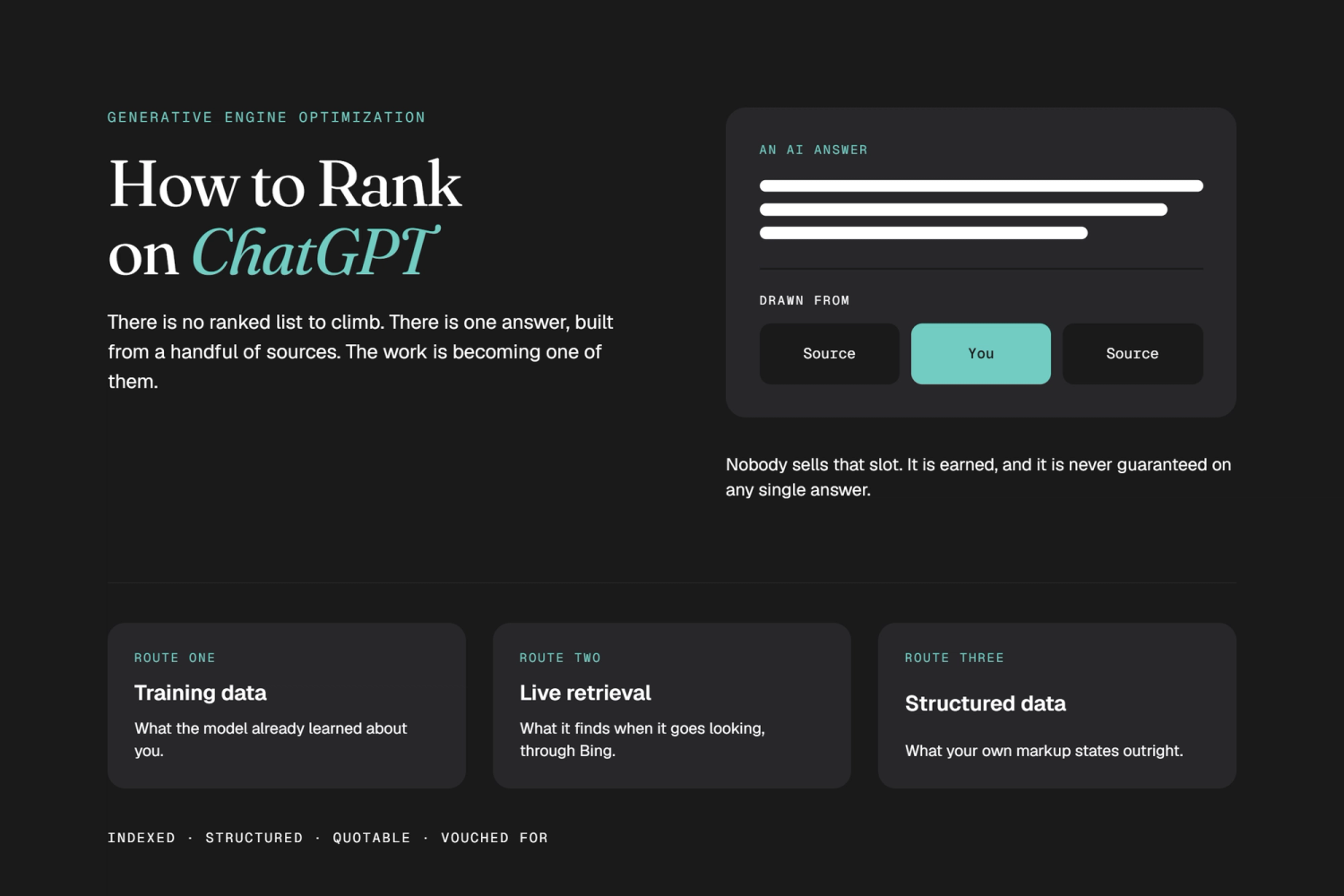
If you have tried to rank on ChatGPT the way you rank on Google, you have probably noticed there is nothing obvious to optimize: no rank button, no results page to climb, no keyword box to win. That is because ChatGPT does not rank pages at all, it cites the sources it trusts, and that single difference rewrites the entire playbook. Earning a spot in those answers is the heart of modern AI search SEO, and it responds to a different set of signals than classic search. Here is what ranking on ChatGPT really means, the three ways it finds you, and a prioritized plan to get into its answers.
ChatGPT has no ranking list like Google. It cites the sources it trusts most when generating an answer. To rank on ChatGPT, make your business easy to find in the Bing index, mark it up with clean schema, earn authoritative third-party mentions, and structure content so the model can extract and quote it confidently.
What "Ranking" on ChatGPT Actually Means
There is no page one on ChatGPT and no ranked list of ten blue links. ChatGPT generates a single answer and cites a few sources it considers trustworthy. So "ranking" here really means being one of the sources the model pulls from, a discipline built on the foundations of SEO services but aimed at citations instead of clicks. The shift is real: Gartner has projected a meaningful decline in traditional search volume, and buyers increasingly ask an assistant instead of scrolling results.
Two facts change how you approach it. First, when ChatGPT searches the live web, its results lean heavily on the Bing index, with one study finding ChatGPT Search results roughly 73% similar to Bing. Second, research on generative engine optimization (Aggarwal et al., the Princeton, Georgia Tech, and Allen Institute team) found that classic tricks like keyword stuffing had little or negative effect, while fact density, meaning authoritative citations, statistics, and quotes, could lift a source's visibility in AI answers by up to 40%. Ranking on ChatGPT is about trust and clarity, not keyword volume.
The Three Ways ChatGPT Finds and Cites You
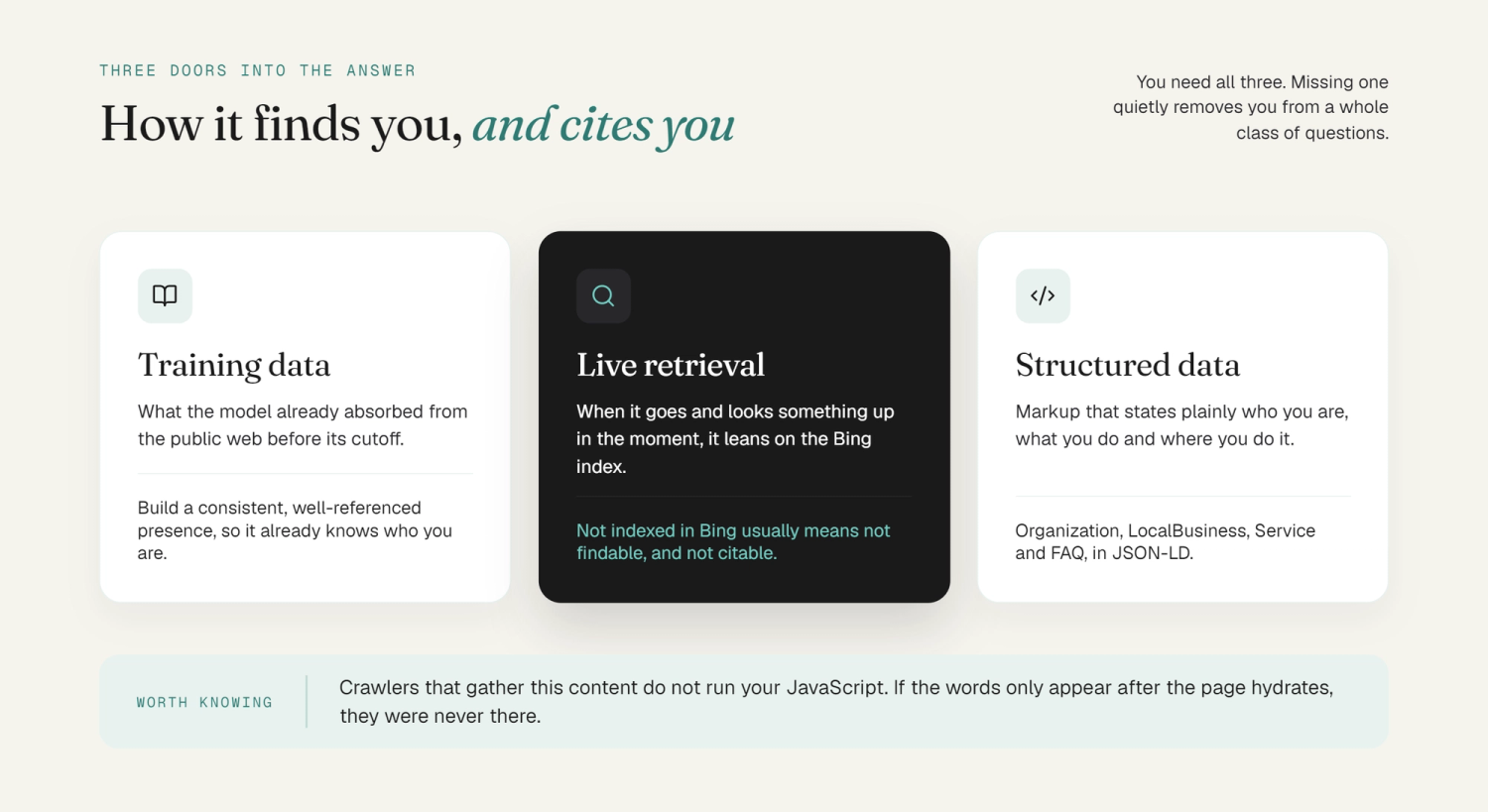
ChatGPT assembles answers from three sources. Knowing which one you are trying to influence tells you what to actually do:
| Source | What it is | How to influence it |
|---|---|---|
| Training data | The public web the model learned before its cutoff | Build a consistent, well-referenced presence so the model already "knows" you |
| Live retrieval | Real-time browsing that leans on the Bing index | Rank and stay indexed in Bing, keep pages fast and crawlable |
| Structured data | Machine-readable schema on your site | Add and validate Organization, LocalBusiness, Service, and FAQ schema |
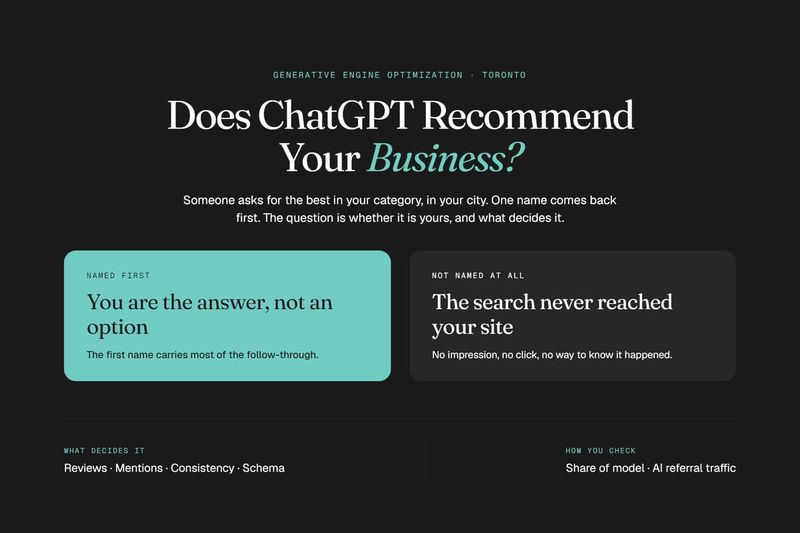
Being cited by name is the goal of this whole effort. If you want to go deeper on the recommendation side specifically, see our guide on whether ChatGPT recommends your business.
How to Rank on ChatGPT: The Step-by-Step Playbook
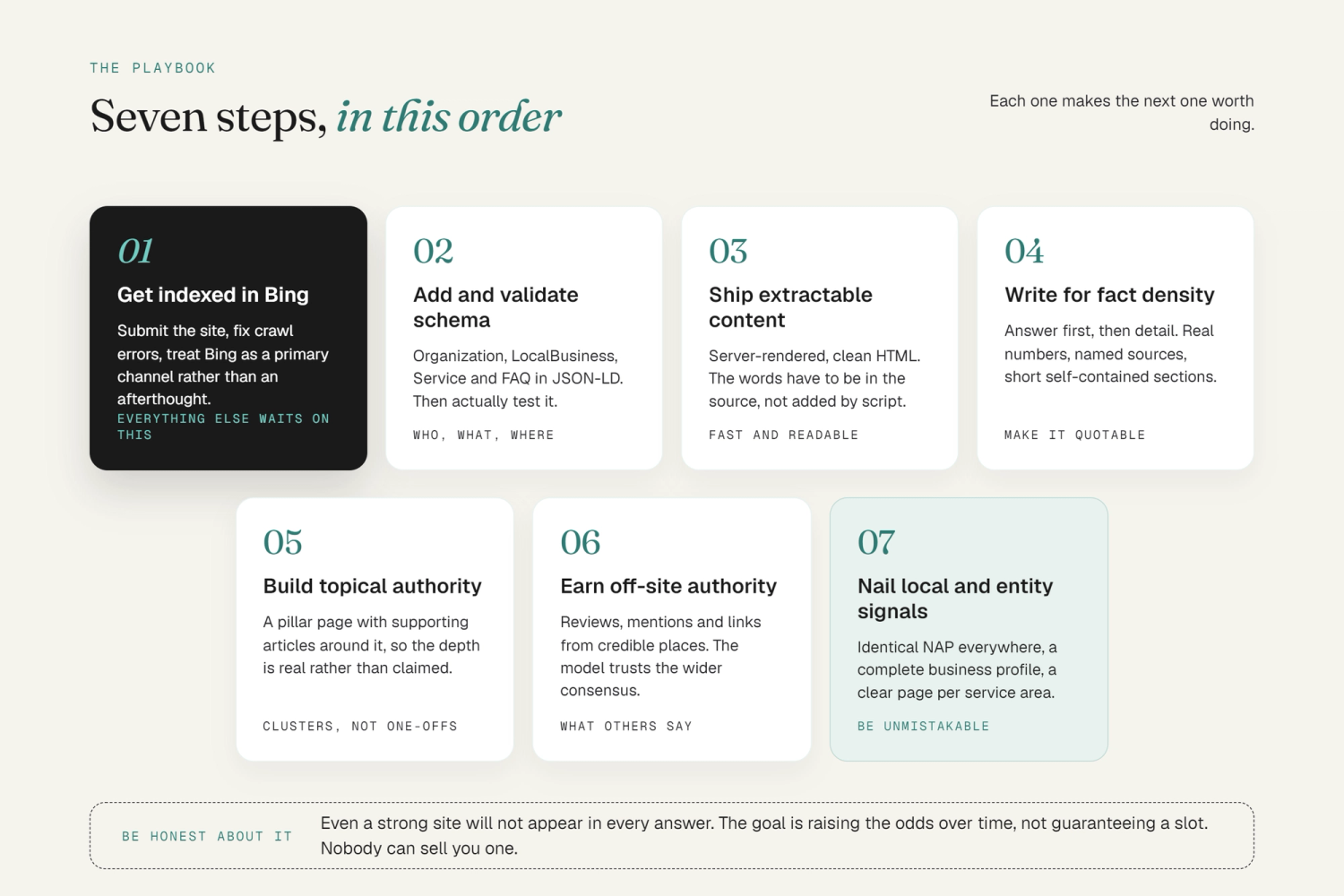
Work these in order of leverage. The early steps make the later ones possible.
1. Get indexed and ranking in Bing. Because ChatGPT's live results track Bing so closely, Bing visibility is one of the highest-leverage moves few competitors prioritize. Submit your site in Bing Webmaster Tools, fix crawl and indexing issues, and treat Bing as a first-class channel, not an afterthought.
2. Add and validate schema. Implement Organization, LocalBusiness, Service, and FAQ schema in JSON-LD and confirm it passes the Rich Results Test. This reduces ambiguity so the model can state who you are, what you do, and where you operate with confidence.
3. Ship server-rendered, extractable content. AI crawlers like GPTBot often do not run JavaScript, so the words they need must be in the initial HTML. A fast, custom-built website that serves clean, structured HTML is what makes your pages readable and citable at all.
4. Write for fact density. Lead each section with a direct answer, then support it with specific, citable claims: real numbers, dates, named sources, and short quotes. Break content into self-contained chunks the model can lift cleanly, and add FAQ blocks that mirror how buyers phrase questions.
5. Build topical authority. One page rarely earns citations. Publish an interconnected cluster around your core topic, a pillar plus supporting articles, so the model sees genuine depth of expertise and retrieval confidence rises.
6. Earn off-site authority. ChatGPT trusts the wider web's consensus about you. Get accurate listings and reviews, and earn mentions in credible publications, local media, and respected round-ups. Scale review-and-referral requests with email marketing so the signal keeps compounding. Emerging data suggests high-authority domains are several times more likely to be cited, so this is a long game worth starting now.
7. Nail local and entity signals. Keep NAP identical everywhere, keep your Google Business Profile complete, and build clear service-area pages for each place you serve. This local groundwork is exactly what local SEO is built to deliver, and it decides local recommendations.
Writing Content That ChatGPT Will Cite
How you write matters as much as what you publish. The model rewards clarity it can extract and quote:
| AI-friendly | Avoid |
|---|---|
| Direct answer first, then detail (BLUF) | Long storytelling before the point |
| Specific stats, dates, and named sources | Vague claims with no evidence |
| Short, self-contained sections | Ideas split across many paragraphs |
| FAQ phrased like real questions | Keyword-stuffed headings |
| Plain-language explanations of findings | Jargon with no interpretation |
For example, instead of "our team can help improve your traffic," write "our clients typically see organic traffic grow within six months." The second version makes a concrete, quotable claim, which is precisely what the model looks for when choosing a source.
How to Measure Whether You Rank on ChatGPT
You cannot improve what you do not track, and there are two layers to watch.
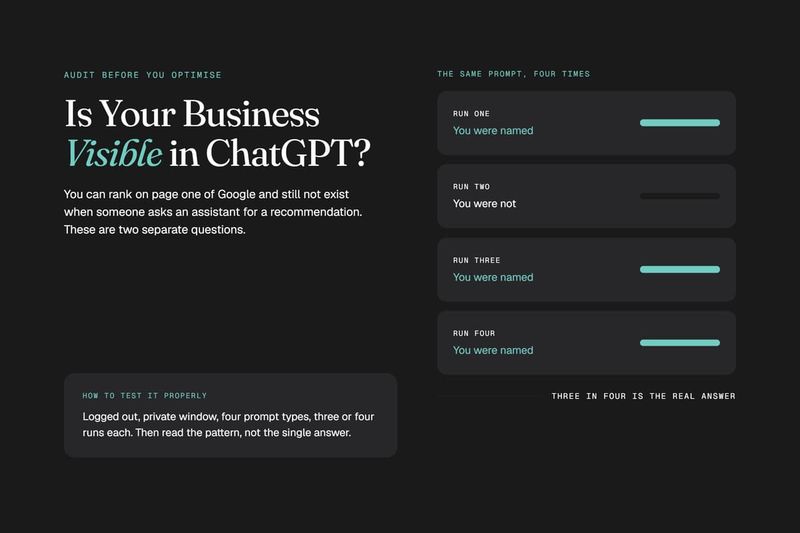
Share of Model. Run your priority category and problem prompts across ChatGPT, Perplexity, and Gemini on a schedule, and record whether you appear, in what position, and how you compare to competitors. That competitor-relative view is your share of model.
Referral traffic. GA4 buries ChatGPT visits in the generic Referral bucket, and clicks from the free app often arrive with no referrer, landing in Direct. Create a custom channel group in GA4 with a regex covering chatgpt.com, openai.com, perplexity.ai, claude.ai, gemini.google.com, and copilot.microsoft.com, then drag it above Referral. Treat the number as a floor, not a ceiling, and watch for Direct-traffic spikes on deep pages as a sign of hidden AI clicks. Pair this with AI automation for instant lead follow-up so AI-referred buyers actually convert.
How Long It Takes, and What You Cannot Do
You cannot pay OpenAI for a citation, and one page will not move the needle. This is earned and probabilistic, so expect a build rather than a switch.
| Timeframe | What to expect | Focus |
|---|---|---|
| Month 1 | Groundwork only | Bing indexing, schema, server-rendered content |
| Month 2 | Occasional citations | Fact-dense content, first authoritative mentions |
| Months 3 to 4 | Regular appearances for category prompts | Topical clusters, reviews, local signals |
| Months 6 to 12 | Consistent citations, stronger positions | Sustained authority, content depth, monitoring |
Even a strong site will not be cited in every single response, since answers vary by design. The goal is a higher probability of inclusion over time, not guaranteed placement.
How Toronto Businesses Can Rank on ChatGPT First
AI search is still an open field, and few GTA businesses have optimized for it, so schema quality, Bing visibility, and content depth can beat a larger competitor's budget right now. The businesses cited by AI next year are the ones doing this work today. To see exactly where you stand against your competitors, start with a free AI visibility audit, and see how this has played out in our case studies.
Frequently Asked Questions
Can you actually rank on ChatGPT? Not in the Google sense. ChatGPT has no ranked list, it cites a few trusted sources when it answers. "Ranking" means becoming one of those sources, which you earn through Bing visibility, clean schema, authoritative mentions, and fact-dense content, rather than through keywords and backlinks alone.
Is ranking on ChatGPT the same as SEO? It builds on SEO but is not identical. Generative engine optimization targets citations in AI answers rather than clicks on links. Strong technical SEO and authority still help, but keyword density matters less, while structure, fact density, and trust signals matter more.
Why does Bing matter for ChatGPT? When ChatGPT retrieves live information, its results lean heavily on the Bing index, with one study finding them roughly 73% similar. If your pages are not indexed and visible in Bing, ChatGPT often cannot find and cite them, which makes Bing a high-leverage and underused channel.
Can I pay to rank on ChatGPT? No. OpenAI does not sell citations or placement in organic answers. Ad formats around AI are beginning to emerge, but the reliable path is earned: indexing, structured data, authoritative mentions, strong reviews, and content the model can quote with confidence.
What kind of content gets cited by ChatGPT? Comprehensive guides, original data, and clear FAQ content that make specific, citable claims. Research on generative engine optimization found that adding authoritative citations, statistics, and quotes can lift a source's visibility in AI answers, while keyword stuffing does little or hurts.
How do I know if it's working? Track two things: your share of model, by testing priority prompts across ChatGPT, Perplexity, and Gemini and logging where you appear, and your AI referral traffic, by setting up a custom AI channel in GA4. Together they show whether your visibility and clicks are trending up.
Continue reading
Read the latest issues
Discussion